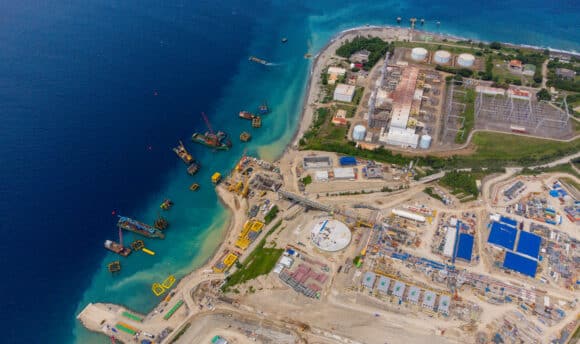

LNG Expansion in the Coral Triangle Biodiversity Hotspot warns the insurance industry against underwriting fossil fuel infrastructure that directly threatens the world’s most biodiverse marine region. Known as the “Amazon of the seas,” the Coral Triangle spans six nations, sustains the livelihoods of over 360 million people, and provides an estimated $855 billion in flood protection through its mangroves and reefs — yet insurers could risk enabling an LNG buildout that scientists warn is incompatible with 1.5°C.
Key findings:
- 19 LNG terminals are already operating in the Coral Triangle, 15 of which sit near critical habitats, with more than 30 new projects proposed — enough to increase regional LNG import capacity by 80%.
- Oil and gas concessions overlap with more than 210,000 square kilometres of conservation areas and 35,000 square kilometres of coral reef, seagrass, and mangrove ecosystems.
- The LNG lifecycle can be 33% more carbon-intensive than coal due to systemic methane leakage — directly contradicting the net zero commitments of many of the insurers and financiers involved.
- Nearly 75% of LNG projects currently under construction risk becoming stranded assets under a 1.5°C scenario, with $379 billion of Asian gas infrastructure at risk.
- Over the last ten years, 65% of proposed new LNG import terminal capacity in South Asia has been shelved or cancelled — rising to 68% over the last five years.
- Southeast Asia’s solar and wind potential is 55 times greater than its current total electricity generation, offering a lower-risk, lower-cost alternative.
Read the full briefing to find out more.