Coral Triangle Day: Most Insurers Refuse to Rule Out LNG Expansion in World’s Richest Marine Ecosystem

Tuesday 9 June 2026 – French insurer SCOR bucks the trend by introducing new restrictions in response to campaigners’ demands On Coral Triangle Day, the Insure our Future coalition reveals that most of the world’s largest insurers and reinsurers have refused to rule out support for LNG expansion in the Coral Triangle, despite mounting evidence …

Swiss Re’s Climate Gymnastics: Can The World’s Largest Reinsurer Catch Up On The Energy Transition?

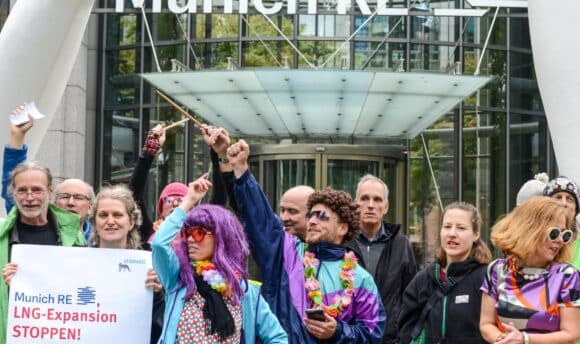
This year, two of the largest global reinsurers, Munich Re and Hannover Re, strengthened their climate policies by tightening restrictions on fossil gas investments and underwriting — welcome, if modest, progress towards net zero as climate-driven extreme weather continues driving record costs and devastating impacts. But under CEO Andreas Berger, the world’s biggest reinsurer Swiss …


LNG

Insurance Risk Briefing: LNG Expansion in the Coral Triangle Biodiversity Hotspot

LNG Expansion in the Coral Triangle Biodiversity Hotspot warns the insurance industry against underwriting fossil fuel infrastructure that directly threatens the world’s most biodiverse marine region. Known as the “Amazon of the seas,” the Coral Triangle spans six nations, sustains the livelihoods of over 360 million people, and provides an estimated $855 billion in flood …

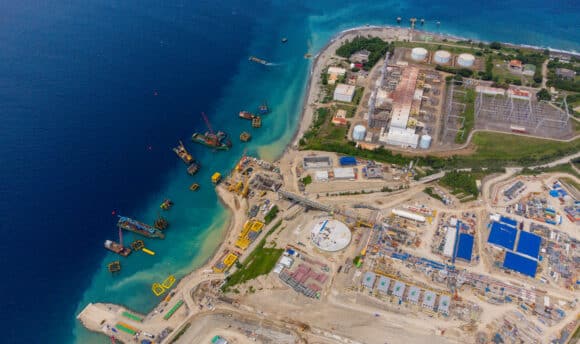
Ilijan Dela Paz Photos - taken by B. Sepe for GSCC

Blog: Over 70 campaign groups demand (re)insurers rule out cover for fossil fuels in the Coral Triangle

Read the letter and risk briefing sent to the world’s leading fossil fuel (re)insurers today. Over 70 civil society organisations from more than 20 countries across 6 continents are calling on the world’s leading (re)insurers to rule out cover for fossil fuel expansion in the Coral Triangle and end their support for new fossil gas …

Ilijan Dela Paz Photos - taken by B. Sepe for GSCC

Press release: Over 70 campaign groups call on insurers to exclude fossil fuel projects in Coral Triangle

Immediate release: 21 April 2026 Tuesday 21 April – More than 70 organisations from over 20 countries across six continents are urging the biggest global insurance and reinsurance groups to stop providing insurance for fossil fuel projects and fossil gas expansion in Southeast Asia’s Coral Triangle due to the risks posed to the most biodiverse …

Conflict, Chokepoints, and Climate: Why insurers should rethink LNG

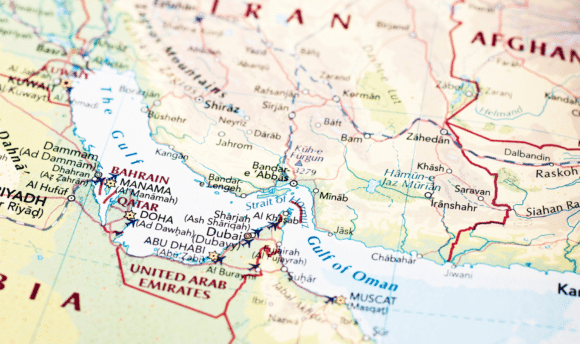
The escalating conflict in the Middle East has quickly become a humanitarian crisis in the immediate region and an economic/energy crisis in countries dependent on the supply of oil and gas that normally flows through the Strait of Hormuz. Thousands of people have died and been injured, millions have been displaced, and millions more around …

Private profits, public losses: Why government support in insurance markets must condition Paris-alignment

Climate change is increasing the frequency and intensity of extreme weather events. This trend, combined with inflation and urbanization in high-risk areas, is driving a continuous rise in losses from natural disasters worldwide. In 2025, global economic losses caused by these events reached €240 billion, more than half of which were uninsured. The story many …

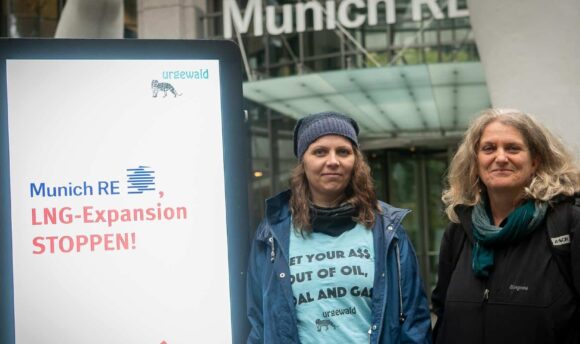
Munich Re’s Revised Fossil Fuel Policy: What Changed, What Didn’t, What’s Next

(Correction: Munich Re’s updated investment policy applies restrictions on any new gas infrastructure, not just new LNG terminals. The text has been corrected.) Last month, Munich Re became the first major reinsurer to restrict the insurance of some new LNG infrastructure. The company updated its fossil fuel policy just weeks after its December Climate Ambition …

World’s second largest reinsurer fails to address full scope of emissions targets

Munich Re gave an update today to its targets to reduce global fossil fuel emissions within its underwriting and investment portfolios.  

Canadian homeowners could turn to litigation to seek recovery of rising home insurance costs

A report released today by Investors for Paris Compliance (I4PC) shows the rising price of home insurance due to climate damages could trigger a wave of lawsuits to recover costs. Last year there were over $9 billion in claims driven by extreme weather in Canada, with much of those costs passed along in the form of …

What Future for Lloyd's Cover

Lloyd’s of London’s booming fossil fuel business bucks market trend

London, 5 November 2025 – (via Reclaim Finance) Lloyd’s of London is bucking the global trend by continuing to grow its fossil fuel business according to new analysis from Reclaim Finance, which finds that its estimated fossil fuel premiums have increased by 2.4% annually between 2020 and 2024, while other insurers have on average seen …

Renewables Gallop As Fossil Fuels Stall - Opportunities and Risks in the Energy Transition

Understanding the Insurance Industry’s Renewable Energy Transition

The global insurance industry stands at a pivotal crossroads in the energy transition. Our report, “Renewables Gallop As Fossil Fuels Stall,” provides an analysis of how insurers are shifting from fossil fuels to renewable energy – and whether they’re moving fast enough to meet climate goals. Here we answer the most pressing questions about the …

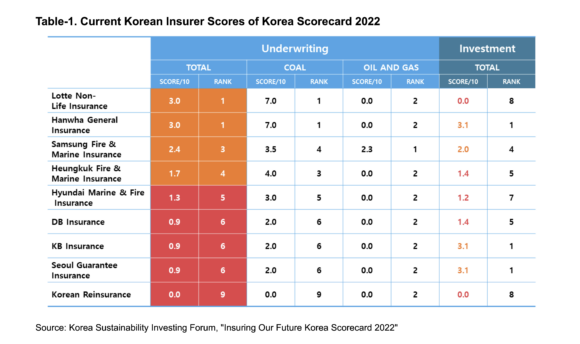
Korean property and casualty insurers lack oil and gas insurance and investment policies

Eight out of nine companies score “0” on oil and gas insurance and investment policies. Need to establish a policy on overall fossil fuels to manage climate change risk. Even as fossil fuels were (and still are) being identified for exacerbating climate change, it was found that Korean domestic property and casualty insurers have no …

2022 Scorecard on Insurance, Fossil Fuels, and the Climate Emergency

Insure Our Future’s annual scorecard ranks the top 30 global fossil fuel insurers on the quality of their fossil fuel exclusion policies. This year Allianz, AXA and Axis Capital rank best for their coal exit policies, while Aviva, Hannover Re and Munich Re come out on top for their oil and gas exclusions. At the bottom of fossil fuel rankings are a group of insurers …

With new coal uninsurable, insurers start to move on oil and gas

62% of reinsurers now have coal exit policies and 38% have oil and gas exclusions as shift away from fossil fuels accelerates Insurance company restrictions on oil and gas are finally starting to catch up with those on coal, according to new data from the Insure Our Future campaign. Ahead of COP27, the campaign coalition …

South Korea’s largest general insurers fail to cut ties with coal, again

Samsung Fire & Marine Insurance and Hyundai Marine & Fire Insurance will not phase out existing underwriting of insurance for coal-powered projects, despite financial and climate concerns, according to their latest ESG reports. South Korea’s largest general insurers Samsung Fire & Marine Insurance (Samsung FMI) and Hyundai Marine & Fire Insurance (Hyundai MFI) announced it …

Samsung’s tougher policy prompts calls for faster coal-exit

All of Samsung’s financial subsidiaries, including Samsung Fire & Marine, adopted one of the most concrete coal-exit policies in South Korea   South Korea’s largest conglomerate Samsung will commit all of its financial subsidiaries to stop investing in coal companies, a new database of South Korean financial institutions’ climate policies revealed Thursday. As the country’s …

Over forty environmental organizations urge Samsung to stop fueling climate change

The world’s third-largest electronics giant claims to be an innovative technology leader but faces global scrutiny on Earth Day over its over-reliance on fossil fuels   More than forty global environmental organisations sent a letter to the Samsung Group, urging the company to stop fuelling climate change and set more ambitious climate measures. The letter was delivered …

The Oil and Gas Policy Tracker

A tool to detect greenwashing practices in the finance sector Reclaim Finance and more than 15 NGOs launch the “Oil and Gas Policy Tracker” (OGPT). The tool is the first of its kind: it assesses in great detail the oil and gas exclusion policies (or lack thereof) of the 150 biggest financial institutions worldwide. The …

Korean insurers have exited new coal while other financial institutions fail to meet global standards

Korean insurers have stopped providing coverage for the construction and operation of new coal-fired power plants finds new report A majority of financial institutions in South Korea failed to meet global standards of divestment from coal, Solutions for Our Climate said in its Wave of Coal Exit Pledges in 2021, Still Lacking Effective Policies issue …

2021 Scorecard on Insurance, Fossil Fuels & Climate Change

Insuring Our Future: The 2021 Scorecard on Insurance, Fossil Fuels and Climate Change, focuses on 30 of the world’s top insurers. It is published by 26 organizations from 14 countries and will be launched today at the COP26 UN Climate Summit in Glasgow. Insure Our Future’s fifth annual report on the insurance industry’s response to …

Insurers’ support for oil and gas undermines climate targets

Coal industry nearly uninsurable as U.S. & Bermuda companies provide last lifeline  The global insurance industry is undermining efforts to meet climate targets by continuing to support new oil and gas production, the Insure Our Future campaign reveals today in its fifth annual scorecard on insurers’ climate policies. Only three insurers, France’s AXA, Italy’s Generali, …

Samsung is still biggest coal insurer in Korea

In November 2020, Samsung Fire & Marine became the first major Asian insurance company to publicly announce an end to insuring new coal-fired power plants. However, recent coal insurance data from Korea Electric Power Corporation’s (KEPCO’s) subsidiaries indicates Samsung F&M remains the biggest coal insurer questioning the validity and effectiveness of its coal policy.  2020 …

2020 Scorecard on Insurance, Fossil Fuels and Climate Change

The 2020 Scorecard finds that Insurers’ continued retreat from coal is making it harder and more expensive to secure insurance for coal projects. Although momentum is growing, it falls short of what is needed to drive action to meet international climate targets. Major companies in the U.S., the Lloyd’s market and East Asia are still …

You have seen 24 of 29

Load more